On the Archetypes of Modern AI and Their Reflections
SHL0MS told the timeline a real Monet was AI and asked why it was bad. Hundreds answered in expert detail, every one of them dissecting a masterpiece. The twist isn’t that they got fooled. It’s what their fluency proves you can do.
The Post
He posted a cropped painting of water lilies, put the “Made with AI” label on it himself, and wrote:
i just generated an image in the style of a Monet painting using AI. please describe, in as much detail as possible, what makes this inferior to a real Monet painting.
It was not AI. It was a real Monet. A cropped detail of one of the Water Lilies, with a label he stuck on by hand. The label on X is manual. You can put it on anything. He put it on a Monet, then sat back and watched a few thousand people explain, in as much detail as possible, why a real Monet was bad AI art.
@SHL0MS is doing his usual thing. Take a little culture-war reflex, distill it down to its dumbest purest form, hold it up to the light. Then the icing on the cake: mint it on the Ethereum blockchain and sell it for 18.98Ξ or ~$42k.
He kept tightening the screws. A follow-up post:
please focus on the specific visual elements that distinguish the AI image from a real Monet painting like the below
Then:
too many people replying with non-answers and provenance witticisms so i will be directly quoting actual direct answers engaging with the question
Translation: stop telling me about the soul, start telling me what is wrong with the picture. So people did. In loving, specific detail. About a real Monet.
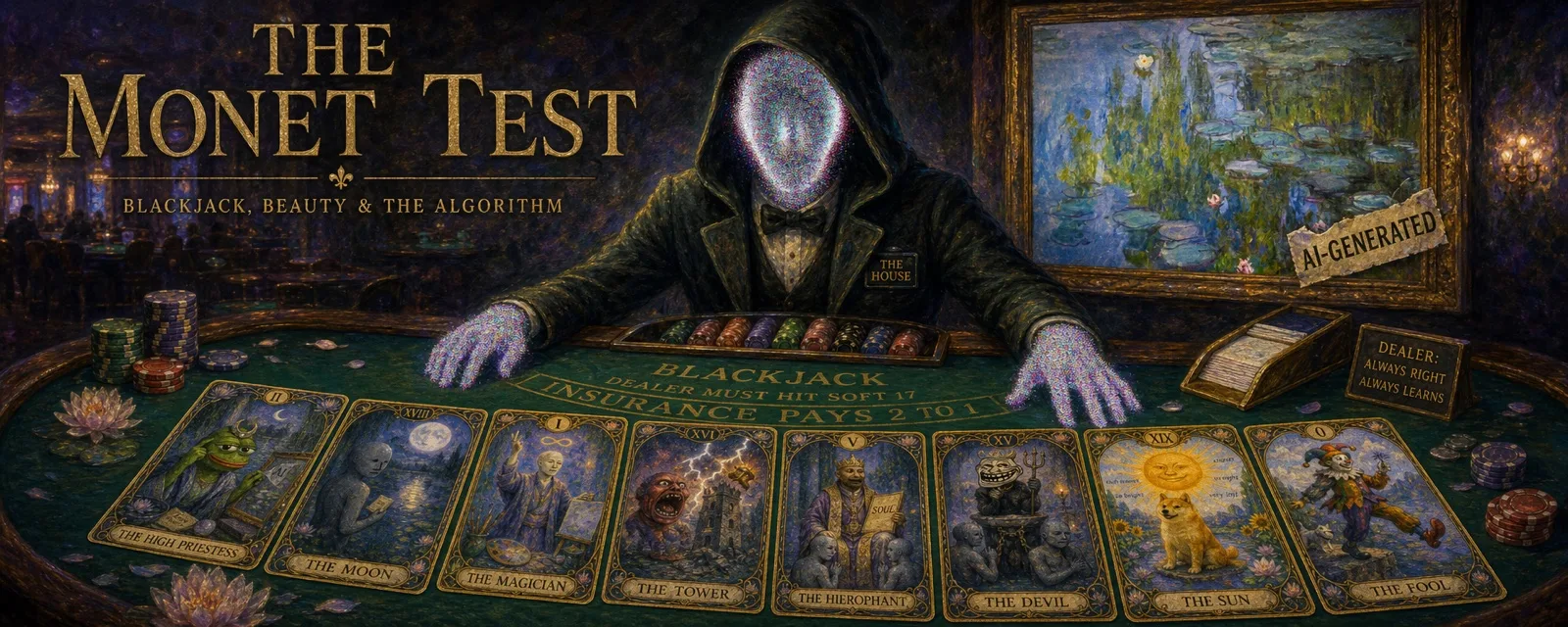
I gathered the data or as much X would allow me to. Just under 300 people with an actual take. Then I sorted every one of them into an archetype, named after tarot cards, because what came back wasn’t art criticism. It was a field guide to how people meet a machine.
The deck
A tarot deck of how a few hundred strangers met a machine.
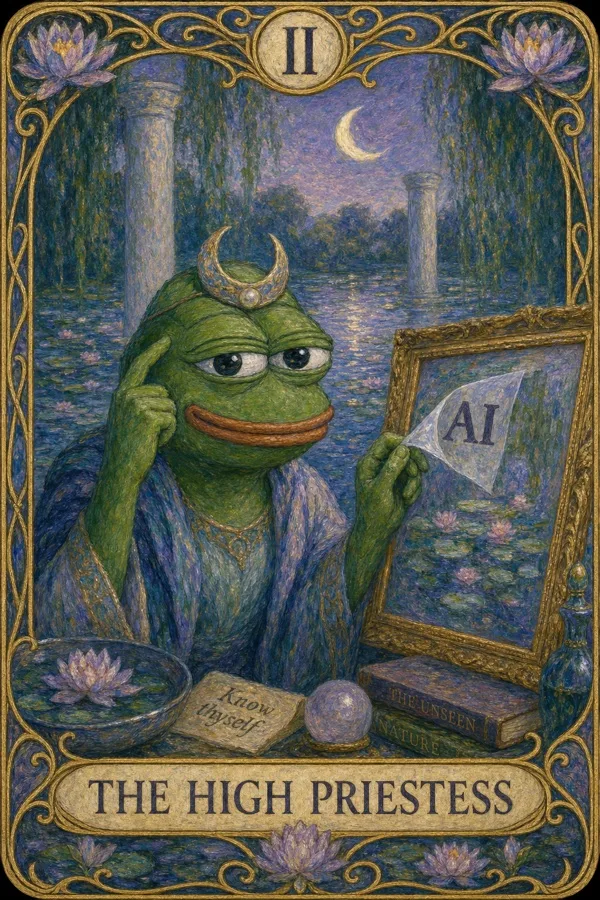
The High Priestess. The ones who saw it. 31%. “This is a detail from an actual late Monet,” one wrote, “you can tell because the brush strokes are super similar to the Agapanthus in MoMA.” Another called the whole mechanism: “you just posted one of the lesser known ones and pretended it was AI.” And the single sharpest line in the thread: “the people who called it AI trusted the label. the people laughing at them are trusting the reveal. same reflex, just pointed the other way.” Hold onto that one.
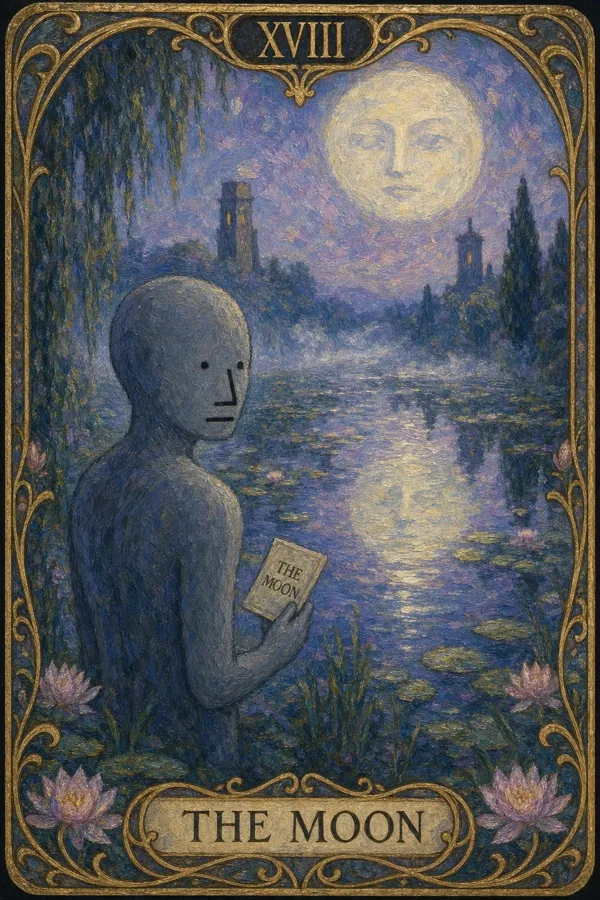
The Moon. The fooled. 22%. Took the bait, grabbed the nearest stock complaint. The reflections are “just noise.” The lilies are “outlined like a child drew them.” My favorite compared the painting to itself and LOST: “the Monet one looks alive, like it’s moving. the top one is rigid and opaque.”
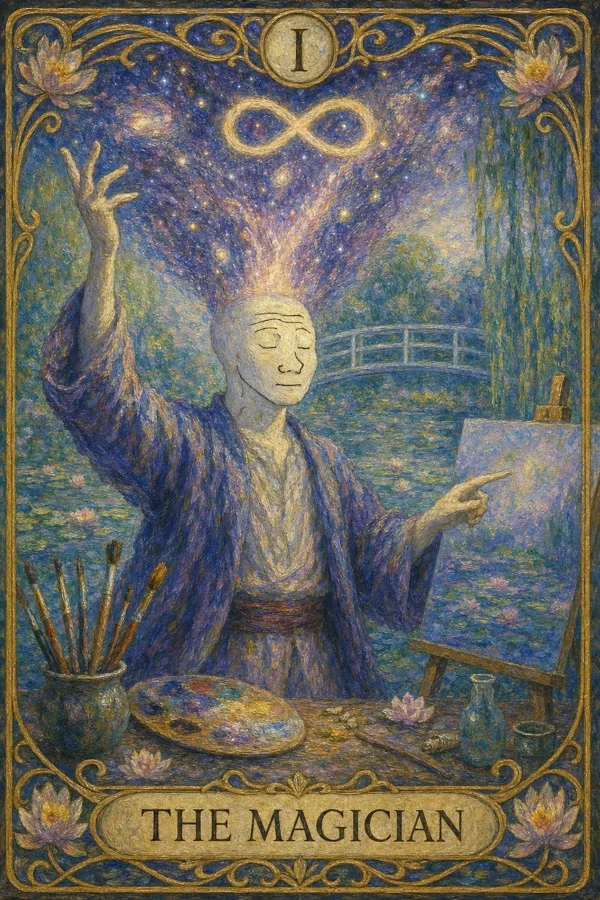
The Magician. The articulate ones. 9% of the people, nearly half the likes. This is the card the whole thing turns on, so slow down here.
These people wrote GOOD criticism. Specific, knowledgeable, real. “No impasto peaks catching that late Giverny light, just smooth ass gradient trash. The reflections? Lazy noise, not the chaos of an old man with cataracts staring at his own pond.” Another one caught a physics violation that does not exist: “the reflection of the willow is upside down. that’s physically illogical. because it’s generated by a vacuum, not by a mind. there is no causality.”
Even Grok got pulled in and confidently itemized the AI tells.
These were the most eloquent people in the room. They were also the most wrong. And the room rewarded them for it. 9% of the people, and nearly HALF the likes. The single most-liked reply in the whole thread was one of these. The better you wrote, the harder you got clapped for being wrong.
I’m sad because one of the ones that deleted it had a picture of an incredibly high-information post: a drawing of where their eyes went when looking at the painting. INCREDIBLY HIGH INFORMATION!
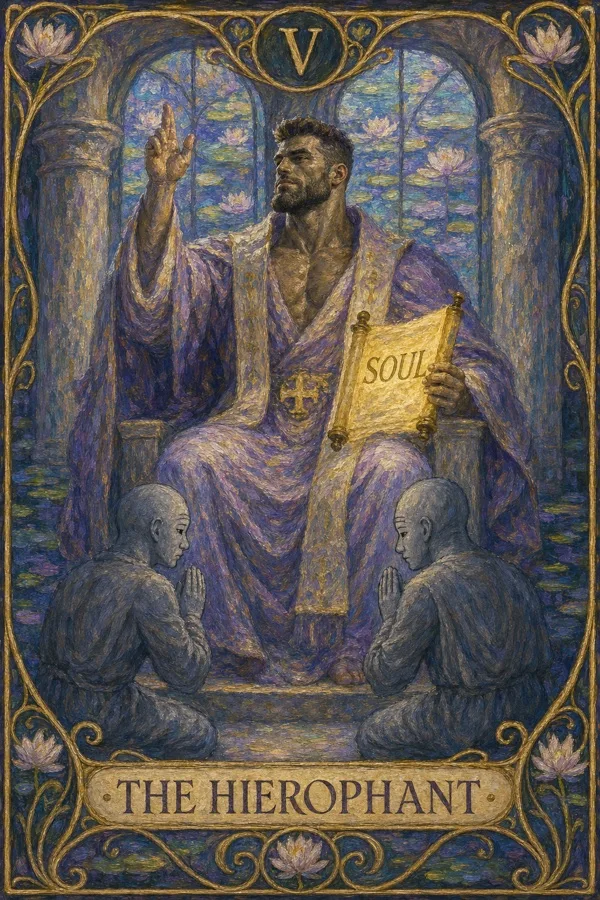
The Hierophant. The doctrine. 16%. Not rage. Theology. “A Monet is a physical artifact of embodied perception. The AI image is a simulation of the appearance of that artifact.” Provenance, soul, the human hand. Calm, well argued, aimed at the wrong target. Barely liked: 3% of the likes for 16% of the people. Nobody claps for a sermon.
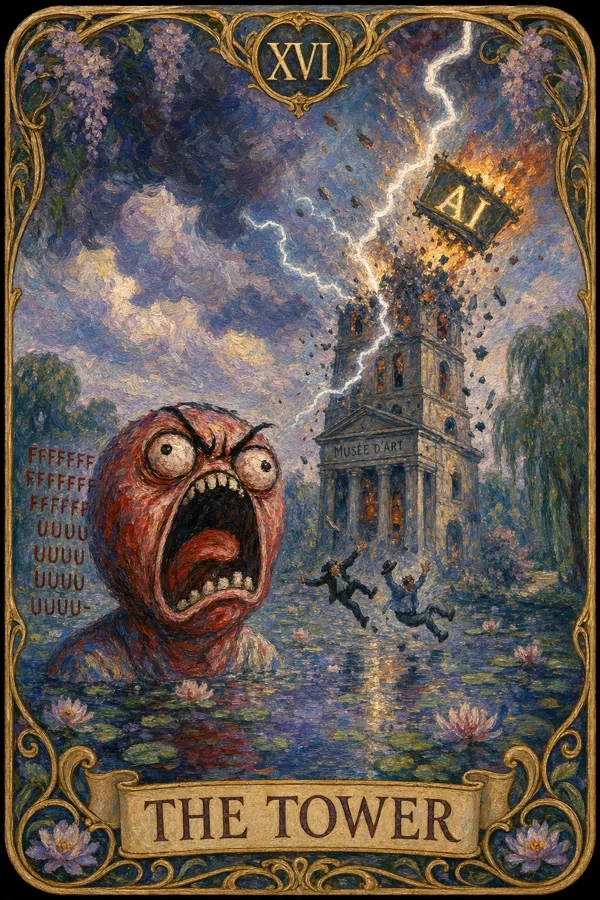
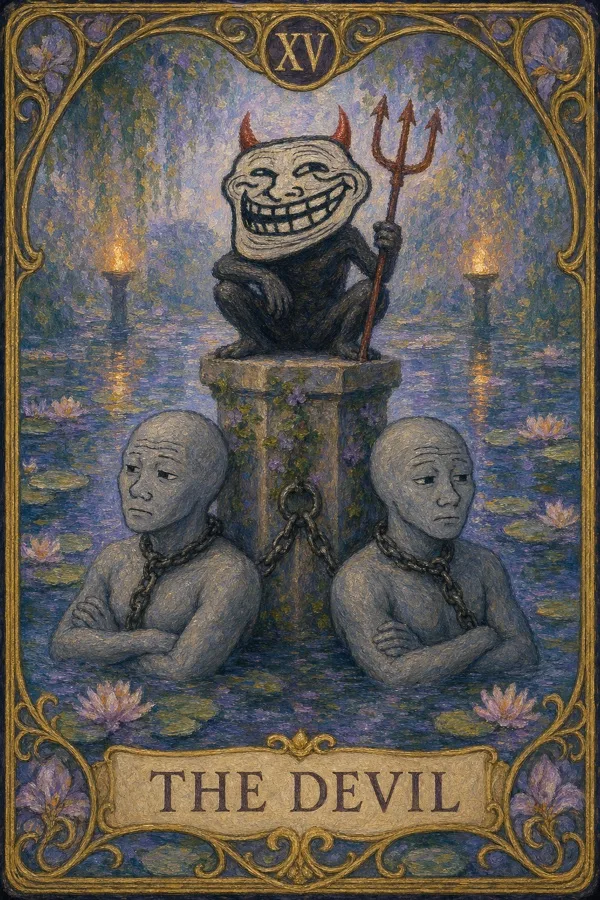
The Tower (rage, 3%) and The Devil (contempt, 3%). The heat. “this ain’t no painting. no talent to it. AI needs to go.” “it sucks. specific enough?” Loud, tiny, and almost nobody liked it.
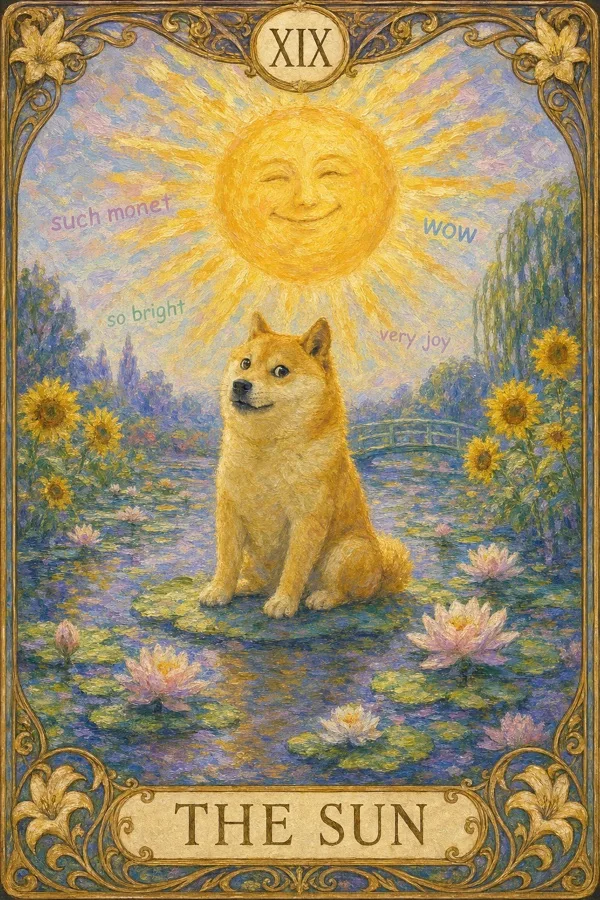
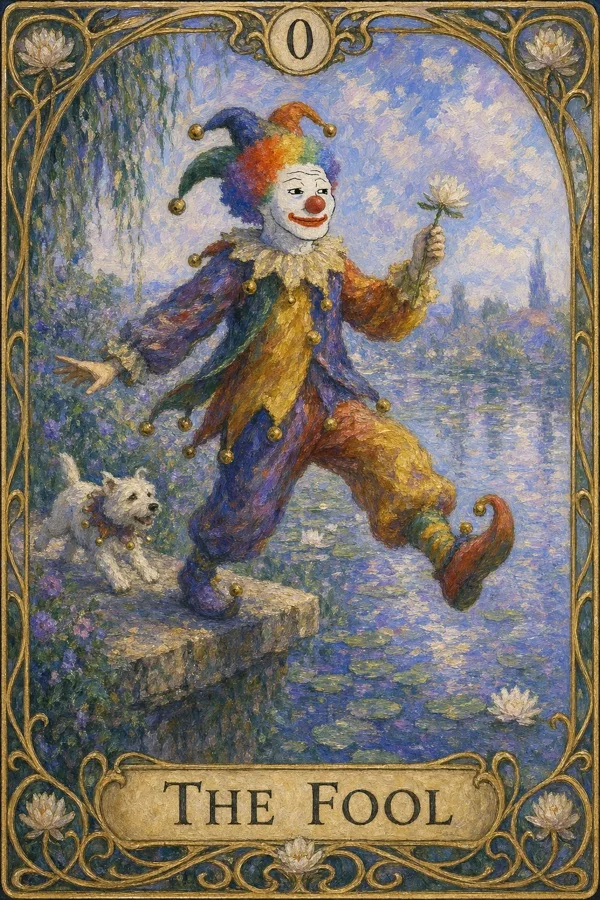
The Sun (delight, 5%) and The Fool (jesters, 11%). The people having a good time and not pretending otherwise. “the ai is in fact superior.” “guess you could say it’s all about the Monet, Monet, Monet.”
The full breakdown
One archetype per person, across just under 300 people who actually answered (bots, @-pings and spam set aside). The “share of likes” column is each archetype’s slice of all the likes, and that’s where the story hides.
| Archetype | Who they are | People | Share | Share of likes |
|---|---|---|---|---|
| The High Priestess | caught it | 82 | 31% | 27% |
| The Moon | fooled, generic | 57 | 22% | 16% |
| The Magician | fooled, articulate | 24 | 9% | 48% |
| The Hierophant | anti-AI doctrine | 42 | 16% | 3% |
| The Fool | jokes | 30 | 11% | 1% |
| The Sun | delighted | 13 | 5% | 1% |
| The Devil | lazy contempt | 9 | 3% | 2% |
| The Tower | rage | 8 | 3% | 2% |
Look at the Magician row. 9% of the people, nearly HALF the likes. The single most-liked reply in the whole thread was a long, confident, technically fluent breakdown of everything wrong with the “AI” image. It was a real Monet. The room paid out for confident, specific, and wrong, and scrolled right past the careful sermons (the Hierophant: 16% of the people, 3% of the likes).
Then there is the other room. The people who didn’t reply but quote-tweeted it out to their own followers are almost the mirror image: roughly SEVEN IN TEN of them had caught the trick, another one in seven were just there for the joke, and almost nobody was still earnestly critiquing the “AI.”
Why the flip? Timing. The replies are the first reflex, before anyone knew. The quote-tweets came later, after the reveal rippled out, so they are people forwarding the gotcha, not falling for it. Same image, same prompt, opposite rooms. The label does its damage in the first few minutes.
One note on what this is NOT. It leaves out the replies people DELETED once the reveal spread, and there were a lot, which means the real fooled-rate in those first minutes ran higher than anything countable now. And it’s text only, so the people who answered with their own annotated images aren’t in here. If only all of the posts were on-chain…
What the Magician is actually about
Here’s the part that I LOVE, and it is good news.
The Magicians weren’t dumb. They were the opposite. Off the top of their heads, no prep, ordinary accounts produced paragraphs of specific, technical, expert-grade art criticism. Impasto, color temperature, composition, the chaos of an old man’s late brushwork. That much precision, on command. That capacity is already in you. You have it right now.
That is the headline almost nobody says out loud: the thing that makes you powerful with AI is not a credential, or a model, or a subscription. It is the ability to say what you want in detail and to hand over context. Better inputs, better outputs. That is the whole equation. The more context you can give it, the more powerful the thing you can build. The Magicians are walking proof that regular people can already produce expert-grade, specific direction on demand. They just aimed it at a label instead of the thing in front of them.
Point it at something real and you can build almost anything. Describe a business in that much detail. A song. A painting. An app. A company. For the first time there is a machine on the other end that will actually make whatever you can specify that precisely. Business, music, art, code, anything. If you can describe it in enough detail, with enough context, it gets built. That is the whole game right now.
It runs on two things, and neither one is talent. Curiosity, to keep asking what you actually want and to go learn the thing well enough to describe it. And determination, to keep feeding in context and correcting until what comes out matches the picture in your head. That is the skill. The barrier to entry is no longer money or permission, it is whether you can be specific and whether you care enough to keep going. Most people can’t be bothered. The ones who can, win.
One honest caveat: this is probably a phase. The bar today is specificity, and that bar rewards anyone willing to describe things precisely. As the models get better at filling in what you leave out, the bar drops and the edge fades. So it’s a window, not a law. Learn to specify NOW and you get a head start before the rest of it goes free.
@SHL0MS held up a mirror and most people only saw the label. Look at the painting instead. Then describe exactly what you want, in as much detail and context as you can. Anyone can. That’s the whole thing.
- @vanities, generated with Claude and my /my-voice skill then proofread, (as everyone should be doing)